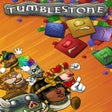
Tumblestone: A strategic match-three puzzle for competitive players
Tumblestone, from The Quantum Astrophysicists Guild, is a puzzle-action title that turns matching mechanics into a planning exercise. Players clear boards by matching triads while avoiding dead ends, combining speed and long-range thinking in each move. The game pairs a narrative-driven single-player campaign with competitive local and online modes, plus arcade variants and progression tracking. It targets fans of classic puzzlers and competitive players who want higher skill ceilings and tactical depth.
What kind of game is Tumblestone?
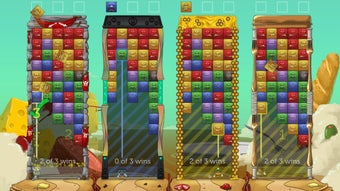
In this game, the core loop is match-three with a strategic constraint: a wrong sequence can render a board unsolvable. Matches are made in sets of three colored blocks, and the mechanic rewards planning because pieces can create dead ends rather than simple clears. This places emphasis on decision-making over pure reflexes, producing a cerebral puzzle flow that borrows the spatial thinking of Tetris and the combo logic of Puyo Puyo.
Does it have multiplayer modes and how do they affect play?
Inside multiplayer, the design supports both local and online competitive sessions for up to four players, plus ranked matchmaking and leaderboards for competitive tracking. Matches push speed and adaptation, while adjustable bots provide practice at different levels, including a punishing high-difficulty opponent for advanced players. Local play suits party sessions with up to four controllers, while ranked matches target players seeking leaderboard competition.
What does the game look and sound like?
When you play, the presentation uses a hand-drawn visual style and a quirky, humorous narrative voice that frames progression through eccentric characters. Audio choices underscore puzzle tension without overwhelming the board; sound cues mark successful combos and incoming hazards. The interface keeps board information visible and provides detailed player statistics, which help assess performance and improve pattern recognition over repeated sessions.
Is it hard to get started and how does progression feel?
Here the learning curve is deliberate: difficulty scales from approachable arcade rounds to demanding endgame content. The single-player campaign contains long-form progression with boss encounters and gameplay modifiers that change rules mid-run, and the game exposes players to hundreds of quests and tracked statistics so skill growth is measurable. However, the high skill ceiling rewards players who invest time in pattern planning and competitive refinement.
Tumblestone suits strategic puzzlers and competitive players more than casual pick-up audiences
The game is a clear choice for players who enjoy planning-driven challenges and ranked competition, supported by a deep single-player arc and detailed performance tracking. Critics praise its intelligent design and players report very positive reception, which confirms its appeal to those seeking a high-skill puzzle experience. However, the demanding challenge and long campaign make it better for committed players than fleeting sessions.